Disneyland, Presentations and Award at the ION-ITM 2026
4 Februar 2026
We presented five papers at the International Technical Meeting (ITM) of the U.S. Institute of Navigation (ION), held in Anaheim (Los Angeles) from January 26–29, 2026. Our work investigates the future of satellite navigation, which could—although not very likely—lie in the exploitation of satellite communication signals. These signals offer higher bandwidth and greater power but, on the other hand, are not designed for navigation purposes. We also discussed in great detail the validation of the ATHENE-1 jamming and spoofing geolocalization payload. In addition, we are among the first users of the Galileo Signal Authentication Service (SAS), which we are seeking to enhance through vector tracking.
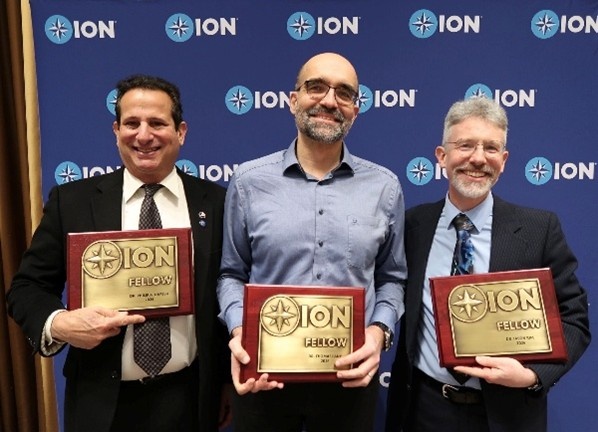
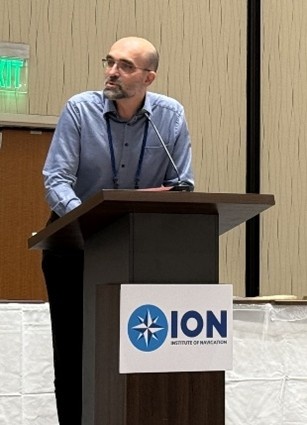
Prof. Pany was awarded with an ION Fellow Membership for his sustained commitment to advancing new navigation concepts and signals through software defined radio. During a remarkable and unexpected short speech, he acknowledged the support he received from his colleagues throughout the years and he is very grateful to his nominators who found time and reasons for his nomination.
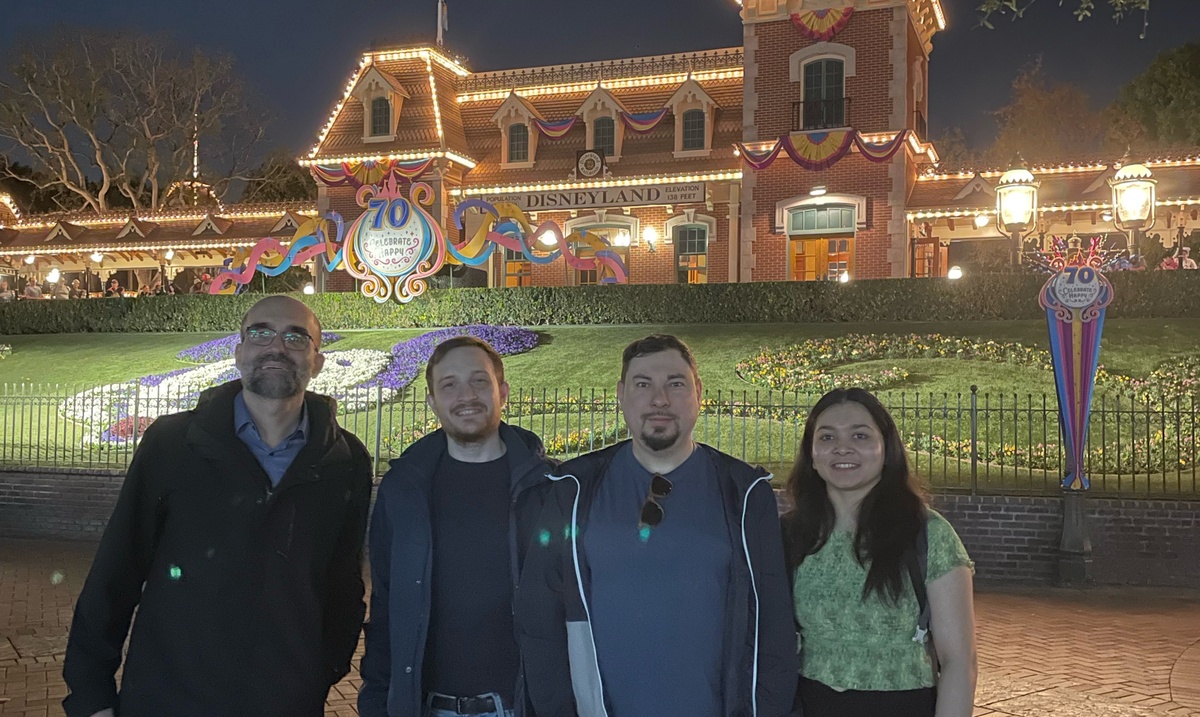
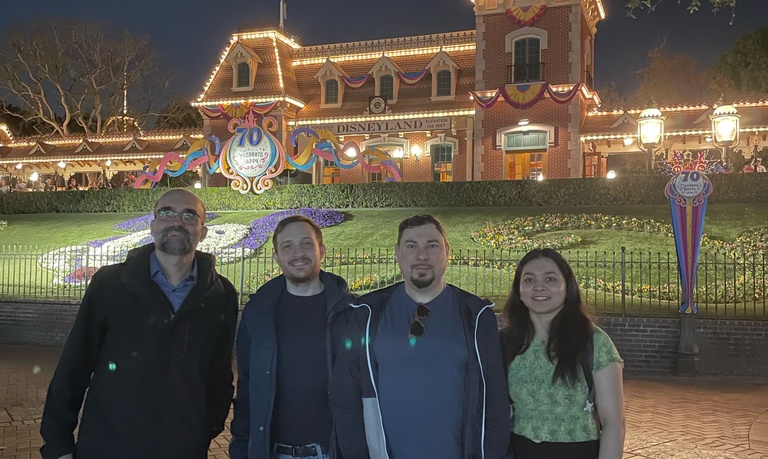
After three intensive days at the conference, we could use the opportunity to visit Disneyland, located just outside the conference hotel.
List of papers presented at the ION-ITM 2026:
“Remarks on Tracking 5G NTN Signals with a GNSS-Centric SDR: CRLB, GPU/CPU-Based Correlation and C/N0-Estimation”: Florian Binder, Muhammad Subhan Hameed, Christian A. Lichtenberger, University of the Bundeswehr Munich; Ottavio M. Picchi, External consultant for the Joint Research Centre, European Commission; Jón Winkel, Winkel Consulting SLF; Marco Rotoloni, Qascom; Francis Soualle, Airbus Defense and Space; Thomas Pany, University of the
“Testing Integrated GNSS plus Pseudolite Positioning with a Programmable GNSS-RF-Simulator”: Mathias Phillip Blum, Muhammad S. Hameed, Thomas Pany", University of the Bundeswehr Munich
“Leveraging Starlink Signals of Opportunity: Phase Tracking, Differential Correlation, and Positioning Results”: Christian A. Lichtenberger, Florian Binder, University of the Bundeswehr Munich; Francesco Menzione, European Commission Joint Research Center; Francis Soualle, Airbus Defence and Space GmbH; Thomas Pany, University of the Bundeswehr Munich
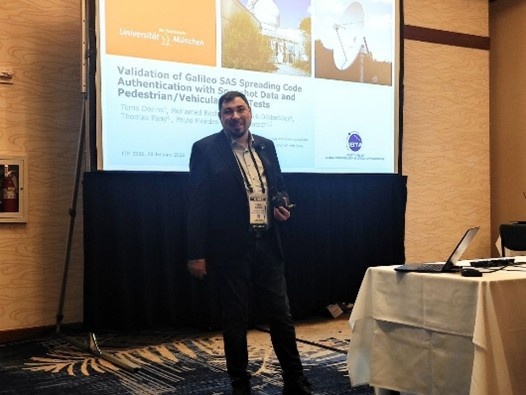
“Experimental Validation of Galileo SAS Spreading Code Authentication Using Encrypted Snapshot Data Sets”: Toms Dorins, Dominik Dötterböck, Mohamed Bochkati, Thomas Pany, Institute of Space Technology and Space Applications (ISTA), Universität der Bundeswehr München
“Development and Verification of a Laboratory Setup for Testing Space-Based GNSS RFI Monitoring and GNSS-R Analysis Payload and Algorithms”: Sahana Bandagadde Umesha, Nikolas Duetsch, Adonees Semaan, Thomas Pany, University of the Bundeswehr, Munich