Whether you are interested in applied security, hardware and software architectures, or the impact of digitalization on our networked world, the courses offered by the SeCoSys professorship provide challenging teaching that combines theory and practice and prepares you for the challenges of tomorrow. Below you will find an overview of our courses, which vary depending on the semester and degree program. For more details, please refer to the module handbooks and the ILIAS pages.
Lecture Crime Scene Internet
- MA INF
- HT: 2021 - 2025
- Description: This course builds on the basic knowledge gained in the lecture "Introduction to the Internet of Things", but can also be taken without this knowledge if the student takes the initiative. Due to the connection of several kinds of devices and using them in every days life, the consumers produce a big data footprint. This information helps us to improve but at the same time is interesting for attackers and may be misused. Thus, this course deals with the dangers posed by networking and shows various potential attacks. The lecture part is designed theoretically and is supplemented by practical tasks in the exercise. After successful completion of the course, the participants will have an understanding of the subject matter itself and of weaknesses in the Internet system, a sense of attack vectors & intentions, as well as an understanding of the process of selected attacks.
Lecture Introduction to the Internet of Things
- MA INF
- WT: 2021 - 2026
- Description: Digitalization is changing our lives. There are more and more digital, networked, intelligent products, services or business models. Fitness trackers, smart homes, self-propelled cars, robots, predictive maintenance are just a few examples. The Internet of Things (IoT) connects the physical world with the digital world. IoT is increasingly becoming an integral part of the business or for consumers. Devices are no longer controlled only by users, but devices communicate directly to automate tasks or processes. This produces a flood of data that offers enormous opportunities but also harbors risks. To be able to assess this, this lecture introduces the topic and presents basics regarding architecture and requirements, used communication and routing protocols and looks at some applications.
Lecture Secure Mobile Systems
- MA INF/CYB
- FT: 2020 - 2025
- Description: The use of mobile devices has penetrated our lives in almost all areas. Making phone calls as the original and primary use of these devices is today only one of a multitude of functionalities that a mobile device provides. Since the introduction of the operating systems iOS and Android, the number of mobile devices using these operating systems has increased enormously every year. At the same time, the number of attacks on information systems and networks, e.g. via malware and denial of service attacks, is increasing, which underlines the importance of securing systems and networks with appropriate security measures. The lecture builds on the course "Mobile Communication Systems". There the most common standards and systems were discussed, but security aspects were neglected. Therefore, this course "Secure Mobile Systems" is dedicated to this topic and considers selected technologies among others: WLAN and IEEE 802.11, Bluetooth, sensor networks (IEEE 802.15.4, ZigBee, 6LoWPAN, LoRa), hardware solutions (Trusted Computing (TPM) and physically non-clonable functions (PUF)), Smartcards, and mobile payment. The aim is to gain a basic understanding of the technologies we use every day and rely on their security. What is behind them and are they really as secure as we think?
Lecture Introduction to Database Systems
- BA INF/WINF
- FT: 2023 and 2025
- Description: This lecture is the classic introduction to the exciting field of database systems. The central topic is relational database systems, in which data is modeled, stored, and queried in tabular form. This strictly tabular view of data is elegant, intuitive yet formal, and can be implemented efficiently by database systems, but it also raises interesting questions that we will address in this lecture: Exactly what services can a database system actually provide? How do you put data into tabular form in a meaningful way, even if data is initially in the form of objects, trees, etc.? What characteristics of tables can we exploit to store and extract data efficiently and without redundancy? Which languages are suitable for accessing masses of table data? The aim is to establish awareness of databases and database systems, but at the same time to point out problems and challenges.
Lecture Embedded System Security
- MA CYB
- FT: 2023 and 2025
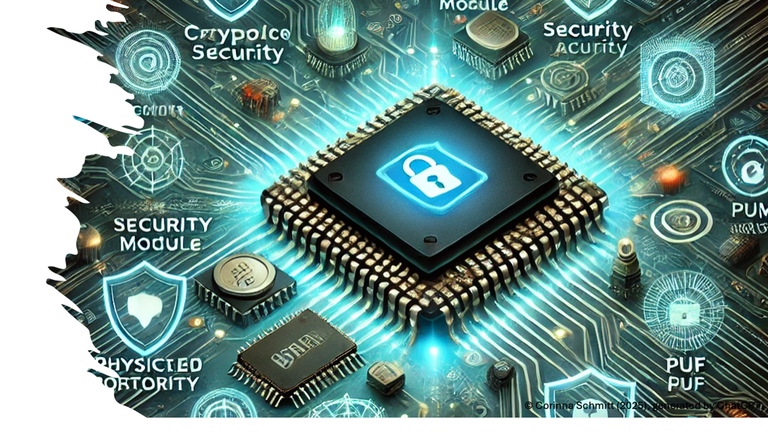
- Description: In the course, after an overview of typical architectures and properties of modern embedded systems, the focus is placed on possible attackers on such systems. Based on that typical attackers have hardware access, various attack possibilities are attack possibilities are explained and put into context with each other. Based on typical hardware chips, security mechanisms and dedicated security chips are discussed. The focus is then placed on cryptographic algorithms and their implementation in embedded systems. The serious so-called side-channel attacks are discussed. The implementation of security mechanisms against the attacks presented will then be discussed. FPGA target platforms are very relevant in special areas of application. The information security of systems based on them is dealt with separately. Finally, the communication security of embedded systems is explained. In the exercise, an exemplary embedded μC system is hardened using the security mechanisms available in the chip hardware. A cryptographic implementation is then ported to this μC and a side-channel attack is carried out. -- My modules concentrate on hardware security - TPM and PUFs - and give a brief introduction on threat modeling analysis.
Seminar Secure Air/Ground Communication Systems
- BA INF/WINF, MA INF/WINF/CYB
- FT: 2022
- HT: 2025
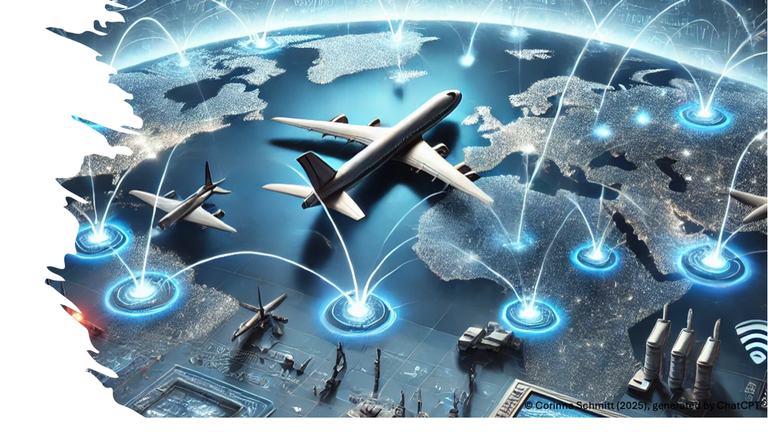
- Description: Digitalization is increasing more and more, so that more and more systems are networked with each other and continuously exchange (sometimes sensitive) data. This data exchange can take place via LAN or wireless connections. Depending on the chosen communication path, this takes place directly or indirectly via several hops. Depending on how much control you have over the infrastructure and which application you are in, the call for secure data exchange, validation of data and access control becomes more and more important. Therefore, this seminar deals with the various options that today's communication standards and their infrastructure provide. We will look at the interfaces and protocols, but also at the corresponding physical properties of the communication path as well as the security options and attack vectors.
Oberseminar SeCoSys
- BA INF/WINF, MA INF/WINF/CYB
- WT/FT/HT: 2022-2026
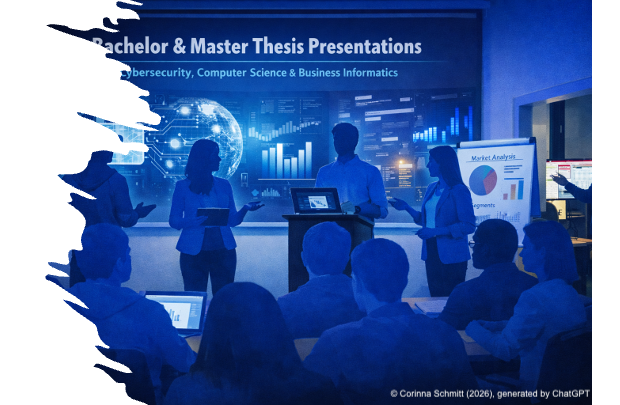
- Description: The purpose of this seminar is to provide a platform for bachelor's and master's students to present and discuss their thesis projects in the fields of cybersecurity, computer science, and business informatics. It encourages academic exchange, constructive feedback, and interdisciplinary dialogue, helping students refine their research, presentation skills, and understanding of current challenges and innovations within their respective disciplines.
Information to past courses can be found here.
Photos: © SeCoSys/Schmitt