PD Dr. Timothy Williams
|
|
PD Dr. Timothy WilliamsCritical Insecurity StudiesInstitute of Political Science
Tel.: +49 89 6004-2408 www.unibw.de/timothy.williams LinkedIn: https://www.linkedin.com/in/prof-dr-timothy-williams/ |
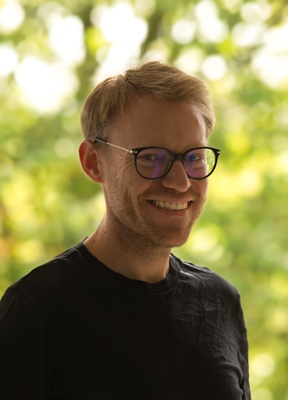
Timothy Williams heads the teaching and research group Critical Insecurity Studies and is based at the Institute of Cultural Studies and the Institute of Political Science within the Department of Social Sciences and Public Affairs. He is a political scientist and conflict researcher whose research and teaching focus on the international politics of violence and discrimination, the politics of memory, sustainable transformations and resilience, and the role of new technologies in collective violence. In particular, he examines how social and political actors engage with the memory of mass violence, persistent discrimination, intersectional differences and divergent notions of justice and peace in order to establish power and pursue political interests, but also to facilitate sustainable transformations. Furthermore, he is interested in the role of new technologies (AI, social meida) in violence and seeks to understand how people discuss violence and how they come to participate in it. He draws on qualitative methods (interviews, participant observation) in fieldwork in Southeast Asia, East Africa and Europe, as well as multi-methodological approaches.
His current book Memory Politics after Mass Violence (2025, Bristol UP) deals with memory politics in Cambodia, Rwanda, and Indonesia and demonstrates how in international politics after mass violence political actors attribute the roles of perpetrators, victims, and heroes in their representations of the violent past in order to consolidate power and gain legitimacy. Previously, he collaborated with Johanna Mannergren, Annika Björkdahl, Susanne Buckley-Zistel, and Stefanie Kappler on a book (2024, Manchester UP) entitled) Peace and the Politics of Memory (winner of the Ernst-Otto-Czempiel Award 2026), which examines five cases of memory entanglements and how they affect peace. His first book, The Complexity of Evil. Perpetration and Genocide (2021, Rutgers UP), examined the motivations of perpetrators to participate in genocide.
After studying political science in Mannheim and comparative politics at the London School of Economics, Timothy Williams completed his PhD at the Centre for Conflict Studies of Marburg University. His PhD has since been acknowledged with two awards, one by the university of Marburg, the other by the German Peace Psychologist Association. He was also a postdoc and project leader of various projects at the Centre for Conflict Studies in Marburg before he moved to the Bundeswehr University Munich where he was also awarded the Lehrbefugnis / Habilitation in political science in 2023. He has been co-chairman of the Research Centre RISKsince 2021 and also served as Vice President of the International Association of Genocide Scholars (2021-2025) and co-editor-in-chief of the ZeFKo Studies in Peace and Conflict (2021-2023)
For more information on my research please also see my personal website.