The team of the Center for Crisis Early Warning would like to thank all participants of the Symposium on Crisis Early Warning for their attendance.
Symposium on Crisis Early Warning
Information
Information to the Symposium on Crisis Early Warning
Information to the Symposium on Crisis Early Warning
Date: September 17 to 18, 2025
Topic: The Potential of Data, AI, and Interdisciplinary Analysis in Situational Awareness and Decision Making
Organiser: German Federal Foreign Office
Center for Crisis Early Warning (CCEW) | Kompetenzzentrum Krisenfrüherkennung (KompZ KFE)
Location: German Federal Foreign Office, Werderscher Markt 1, 10117 Berlin, Germany
The program for the Symposium on Crisis Early Warning
The program for the Symposium on Crisis Early Warning
Please download the program as a PDF.
Wednesday 17.09.
08:15 – 09:00 Registration & Coffee
09:00 – 09:45 Welcome & Keynotes
                   State Minister Florian Hahn, Federal Foreign Office
                   State Secretary Nils Hilmer, Federal Ministry of Defence
                   Prof. Carlo Masala, Head, Center for Crisis Early Warning
09:45 VIP Policy Panel: “Crisis Early Warning in times of perpetual crises – still worth it?”
                   Chair: Prof. Carlo Masala, Head, Center for Crisis Early Warning
                          Philipp Rotmann, Director, Global Public Policy Institute
                          Anka Feldhusen, Director for Civilian Crisis Prevention and Stabilization, FFO
followed by Coffee Break
11:00 – 12:30 Research Panel I: “Leveraging Large Language Models in Crisis Early Warning”
                   Chair: Dr. Hannes Müller, Institute for Economic Analysis
                          Dr. Edoardo Vigano, Witten/Herdecke University
                          Dr. Egemen Bezci, University for Continuing Education Krems
                          Laura Braun, Center for Crisis Early Warning
12:30 – 13:30 Lunch
13:30 – 15:00 Research Panel II: “Advancing Methodological Approaches in Crisis Early Warning”
                   Chair: Dr. Paola Vesco, Uppsala University
                          Prof. Thomas Chadefaux, Trinity College Dublin
                          Chandler Williams, Peace Research Institute Oslo
                          BND Desk Officer
15:00 – 16:15 Workshops (parallel)
                   Session 1: Interactive Scenario Lab – A Case Study on Strategic Foresight (Willy-Brandt-Saal)
                   Session 2: Hybrid Threats – State-Targeted Cyber Attacks as Digital Smoke Before Escalation? (Adenauer-Saal)
                   Session 3: Data driven Anticipatory Action (Stresemann-Saal)
16:15 – 16:45 Coffee Break
16:45 – 17:45 Policy Panel I: “How to warn? – lessons and best practices”
                   Chair: Isabelle Arradon, International Crisis Group
                          Andreas Pérez Fransius, European External Action Service
                          Minako Manome, Development Risk Practice Unit, UNDP
                          Dr. Philip AbdelMalik, Hub for Pandemic and Epidemic Intelligence, WHO
                          Colonel (GS) Oliver Esdar, Chief of Branch MEO I 3, Federal Ministry of Defence
17:45 – 19:00 Canapés & Fingerfood (Genscher Forum)
Thursday 18.09.
08:15 – 09:00 Check-in & Coffee
09:00 – 09:15 Welcome
09:15 – 10:45 Research Panel III: “Conflict Onset and Civil War Recurrence in Crisis Early Warning”
                   Chair: Dr. Nadine O’Shea, Technical University of Munich
                          Lotta Rüter, Karlsruhe Institute of Technology
                          Hannah Frank, Trinity College Dublin
                          Dr. Namig Abbasov, Arizona State University
10:45 – 11:00 Coffee Break
11:00 – 12:15 Workshops (parallel)
                   Session 4: Central Risk Factors in Early Warning (Stresemann-Saal)
                   Session 5: Think Like an Adversary – A Practical Exploration of the Disruptive Potential of AI (Willy-Brandt-Saal)
                   Session 6: Pimp My Dataset – Enhancing Existing Event Datasets with Large Language Models (Adenauer-Saal)
12:15 – 12:30 Plenary Workshop Recap
12:30 – 13:30 Lunch
13:30 – 14:15 Policy Panel II: “Global Commons or national silos? Informed decisions through common datasets”
                   Chair: Anka Feldhusen, Dir. for Civilian Crisis Prevention and Stabilization, FFO
                          Dr. Martin Frick, World Food Program
                          Prof. Clionadh Raleigh, Armed Conflict Location & Event Data
                          Dr. Barbora Šedová, Potsdam Institute for Climate Impact Research
14:15 – 15:45 Research Panel IV: “Exploring New Data in Crisis Early Warning”
                   Chair: Prof. Melanie Sauter, Universität Mannheim
                          Christoph Deppe, Helmut Schmidt University
                          Dr. Allison Koh, University of Birmingham
                          Dr. Anne Schneibel, German Aerospace Center
15:45 – 16:00 Closing Remarks: Anka Feldhusen, Federal Foreign Office
Impressions 2025
Impressions 2025
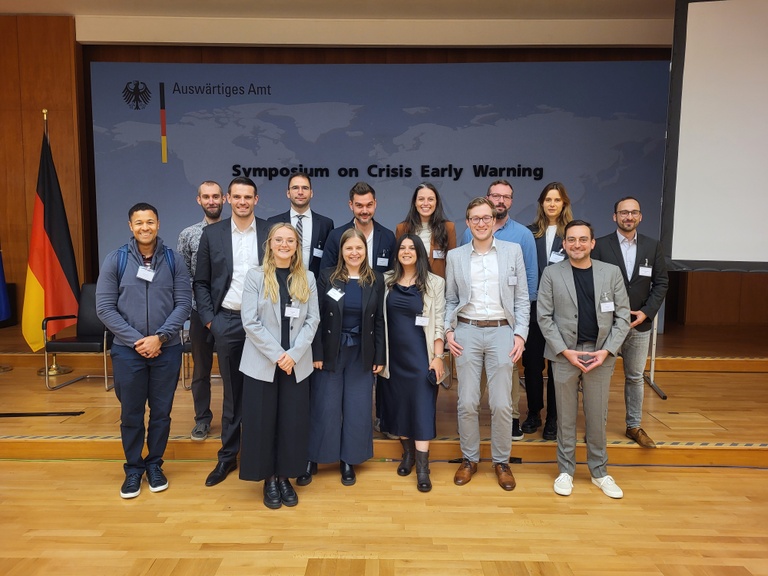
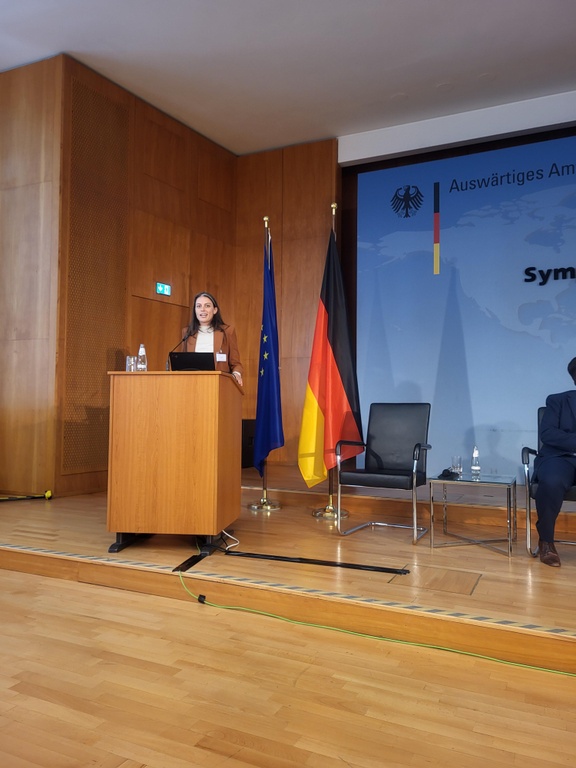
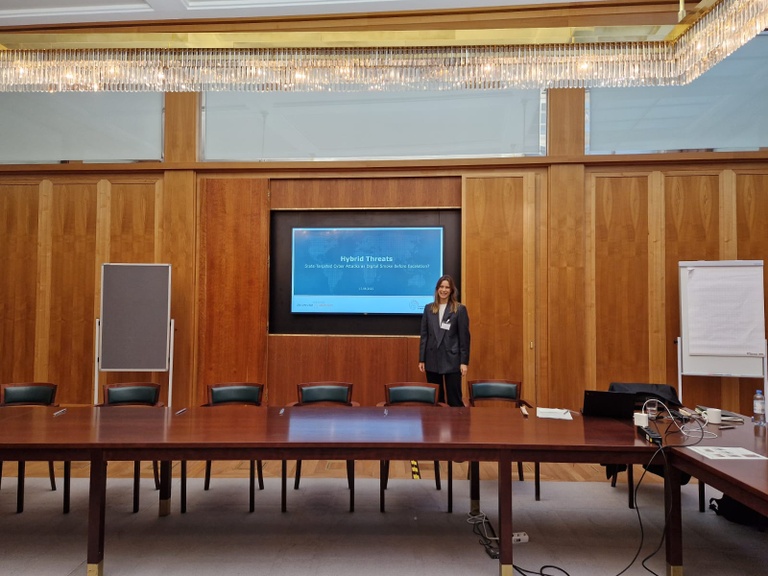
Pictures: © CCEW
Chatham House Rule
Chatham House Rule
We are pleased to welcome you to our upcoming event. As part of the event, we would like to draw your attention to the application of the Chatham House Rule, which is mandatory for all participants.
The Chatham House Rule aims to promote an open dialogue among participants while maintaining confidentiality. The rule states that participants are free to discuss the contents of the event, but must not disclose the identity or affiliation of the speakers or participants. This allows participants to share their views and experiences honestly and openly, without fear of being traced or published.
As organizers, we want to ensure that all participants have the freedom to express their opinions and views without any consequences. We therefore ask all participants to adhere to the Chatham House Rule and treat their discussions confidentially.
We are confident that the application of the Chatham House Rule will help facilitate an open and productive discussion that will be of great benefit to all participants.
We thank you in advance for your cooperation and look forward to your participation at the Symposium on Crisis Early Warning.
Contact
Contact
If you have any questions, please send an Email to: