ICAS 2026: ELAPSED Research Presented in Sydney
5 Oktober 2026
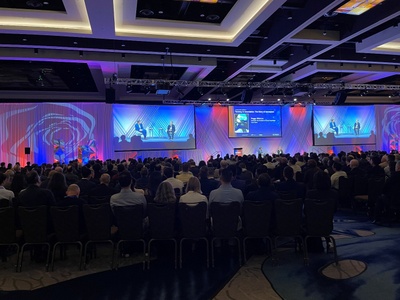
The ELAPSED project presented five papers at the 35th Congress of the International Council of the Aeronautical Sciences (ICAS 2026), which took place from 13 to 17 September 2026 in Sydney, Australia. ICAS is held every two years and is one of the main international meetings for aeronautical research.
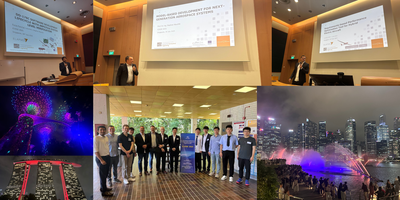
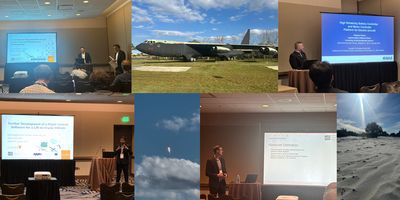
Five members of the team travelled to Sydney. Their papers covered reconfigurable battery systems for electric aviation, the software development and verification methods behind them, flight performance analysis and robust flight control.
Wolfgang Bliemetsrieder presented "Analysis of Software Development Methods for a Reconfigurable Battery System for Use in an Electric Aircraft." The paper compares how model-based functional software and hand-written driver code are integrated on the embedded controllers, and shows how that choice affects runtime behavior and certification effort.
Luca Hein presented "Flight Performance Analysis of Electric Aircraft under Motor Failure Conditions Using Reduced-Order Modeling." The paper examines how electric aircraft behave when propulsion is lost and uses reduced-order models to keep the analysis fast enough for early design studies.
Purav Panchal presented "Hardware-in-the-Loop Verification of a Safety-Critical Reconfigurable Battery Management System for an Electric Aircraft." The paper shows how the distributed battery controllers are verified on embedded target hardware in a real-time test environment, following the RTCA DO-178C and DO-331 standards.
Nina Sorokina opened the team's contribution with "Reconfigurable Multilevel Battery Architecture for Small UAV Propulsion Systems," which applies the reconfigurable multilevel battery concept to the propulsion systems of small unmanned aircraft.
Denis Surmann presented "Gain Optimization for Cascaded INDI Control with Integrated Performance and Robustness Requirements." The paper shows how the gains of a cascaded incremental nonlinear dynamic inversion controller can be optimized so that performance and robustness requirements are met at the same time.
The five contributions came from the Institute for Aeronautical Engineering and the Institute for Energy Technology and show how closely the two institutes work together within ELAPSED. The team also used the congress to discuss the work with researchers and industry representatives from around the world.